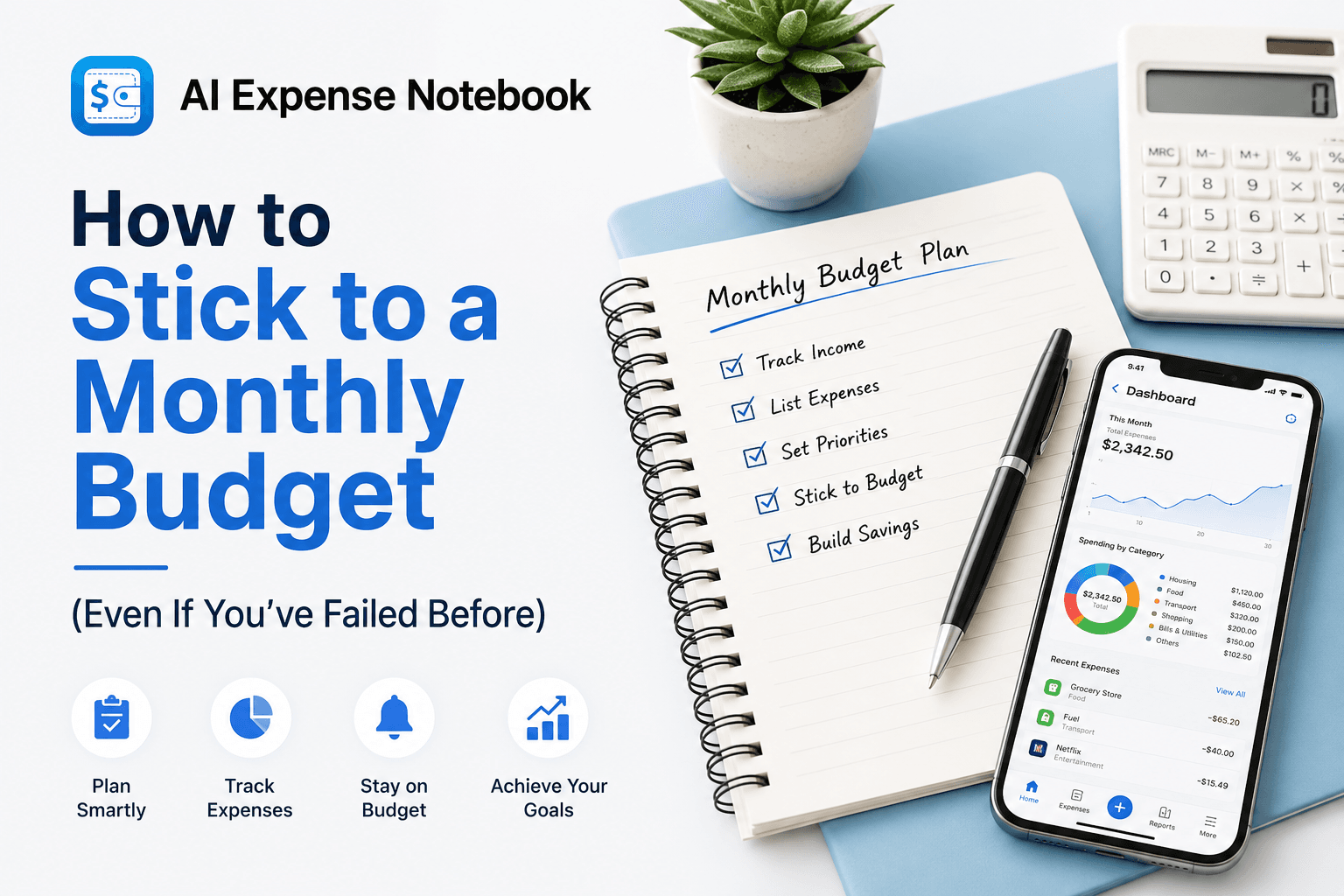
How to Stick to a Monthly Budget (Even If You've Failed Before)
If you've ever created a monthly budget only to abandon it after a week or two, you're not alone. Millions of people start every month with good intentions but end up overspending, forgetting to track expenses, or giving up when life gets in the way.
The good news? Budgeting isn't about having perfect self-control—it's about building a system that works even when you're busy, stressed, or faced with unexpected expenses.
Whether you're trying to save money, pay off debt, or simply understand where your paycheck disappears each month, this guide will show you practical strategies that are realistic and easy to maintain.
If you've struggled with overspending in the past, you may also find our guide on How to Stop Overspending: A Practical Guide to Taking Control of Your Money in 2026 helpful for identifying spending triggers before creating a budget.
Read also: How to Stop Overspending: Complete Guide
Why Most Monthly Budgets Fail
Many people believe they lack discipline when a budget doesn't work. In reality, the problem is often the budgeting method—not the person.
Here are some of the biggest reasons budgets fail:
- Setting unrealistic spending limits
- Forgetting to track daily expenses
- Ignoring irregular or unexpected costs
- Trying to change every spending habit overnight
- Giving up after one bad week
A successful budget isn't about restriction. It's about awareness, consistency, and making informed financial decisions. According to the Consumer Financial Protection Bureau (CFPB), tracking your spending is one of the most effective ways to improve financial stability.
Learn more: https://www.consumerfinance.gov/
Start by Understanding Where Your Money Goes
Before creating spending limits, spend a week or two tracking every expense. Don't worry about changing your habits immediately.
Simply observe.Record everything, including:
- Coffee
- Food delivery
- Groceries
- Transportation
- Streaming subscriptions
- Online shopping
- Utility bills
- Rent or mortgage
- Medical expenses
- Cash purchases
Many people are surprised to discover how small purchases accumulate throughout the month.
For example:
- Coffee: $6 × 20 days = $120
- Food delivery twice a week = $180+
- Random online purchases = $150
Without tracking, these expenses often go unnoticed. This is where an expense tracker like Expense Notebook makes budgeting much easier. Instead of relying on memory, you can instantly log expenses, organize them into categories, and see where your money is going in real time.
Create a Budget That Matches Your Real Life
One common mistake is copying someone else's budget.Your financial situation is unique. Instead of forcing unrealistic spending limits, build a budget based on your actual income and spending habits.
Start with three categories:
Fixed Expenses
These usually stay the same every month.
Examples include: Rent, Mortgage, Insurance, Internet, Phone bill, Loan payments, Childcare. These should be your first priority.
Variable Expenses
These change from month to month.
Examples include: Groceries, Dining out, Fuel, Shopping, Entertainment, Personal care.These categories usually provide the greatest opportunity to save money.
Savings Goals
Treat savings like a monthly bill. Even saving a small amount consistently is better than waiting until the end of the month to see what's left. Your savings could include: Emergency fund, Vacation, New laptop, Home down payment, Investments, Debt repayment.
The key is consistency, not perfection.
Follow the 50/30/20 Rule—But Adapt It to Your Needs
The 50/30/20 budgeting rule is a popular starting point.
According to Investopedia, the rule suggests:
- 50% for needs
- 30% for wants
- 20% for savings and debt repayment
Learn more: https://www.investopedia.com/
However, don't treat these percentages as strict rules. If you're living in an expensive city, your housing costs may exceed 50%. If you're aggressively paying off debt, your savings category may be larger.
Think of this framework as guidance, not a requirement.
Budget Weekly Instead of Monthly
Thinking about an entire month can feel overwhelming. Instead, divide your budget into weekly spending targets.
For example:
Monthly grocery budget: $400
Weekly grocery budget: $100
Entertainment: $160 monthly
Weekly goal: $40
Weekly budgeting gives you more opportunities to adjust before overspending becomes a problem.
Track Expenses Daily (It Takes Less Than a Minute)
One habit separates successful budgeters from everyone else: They know where their money goes.
Daily expense tracking prevents surprises. Instead of wondering why you're over budget at the end of the month, you'll notice patterns early enough to make adjustments.
Expense Notebook makes this process effortless by allowing you to:
- Scan receipts using AI
- Automatically organize expenses into categories
- Monitor monthly spending
- View spending insights through charts
- Set category budgets
- Receive budget alerts before overspending
This removes much of the manual work that causes people to stop budgeting altogether.
Expect Unexpected Expenses
Life rarely follows a perfect budget. Your car might need repairs, birthday invitation appears, your pet needs medication. These aren't budgeting failures—they're part of life. Even setting aside a small amount each month can reduce financial stress when surprises happen.
The Federal Trade Commission's Consumer.gov also recommends planning for unexpected expenses as part of maintaining healthy finances.
Review Your Budget Every Sunday
Budgets shouldn't sit untouched until the end of the month. Spend 10–15 minutes each week reviewing:
- How much you've spent
- Categories nearing their limits
- Upcoming bills
- Savings progress
- Areas where you can adjust
Weekly reviews help you stay proactive rather than reactive.
Use Technology to Stay Consistent
The biggest budgeting challenge isn't creating a plan—it's sticking with it. That's why many people benefit from using a dedicated expense tracker instead of relying on spreadsheets or memory.
With Expense Notebook, you can:
- Track expenses in seconds
- Scan paper receipts with AI
- Categorize spending automatically
- Monitor monthly budgets
- View visual spending reports
- Access your financial history whenever you need it
Because everything is organized in one place, it's much easier to stay consistent throughout the month.
If you're looking for a modern budgeting solution, you may also enjoy reading The Best Free Money Manager and Expense Tracker App, where we explain how Expense Notebook simplifies everyday money management.
Frequently Asked Questions
Why do I keep failing at budgeting?
Most people fail because they create unrealistic budgets, don't track expenses consistently, or give up after minor setbacks. A flexible budget combined with daily expense tracking is far more sustainable.
How often should I review my budget?
A weekly review is ideal. It helps you catch overspending early, prepare for upcoming bills, and make adjustments before the month ends.
What's the easiest way to stick to a monthly budget?
Track your expenses every day, set realistic spending limits, and use an expense tracking app that automatically organizes your spending. Small, consistent habits are more effective than drastic changes.
Is the 50/30/20 budget right for everyone?
No. It's a useful guideline, but your budget should reflect your income, cost of living, financial goals, and personal circumstances.
Final Thoughts
Sticking to a monthly budget isn't about saying "no" to everything you enjoy. It's about making intentional decisions with your money so you can spend confidently, save consistently, and avoid financial stress.
If you've failed at budgeting before, don't assume budgeting isn't for you. More often than not, you simply need a system that's easy to maintain.
Expense Notebook helps simplify the process with AI-powered receipt scanning, automatic expense categorization, budget tracking, insightful spending reports, and timely budget alerts—making it easier to stay on track without adding more work to your day.
Start with one habit today: track every expense for the next seven days. That single change could be the first step toward building a budget that finally sticks.
Get this app: Download on iPhone